


24 Sep Warehouse and Industrial Cleaning Services in DFW: What Facility Managers Need to Know
Warehouse and industrial cleaning services are a different discipline from commercial office cleaning — and the facility managers who’ve hired a general janitorial company for an industrial space and been disappointed already understand why. The cleaning requirements in a warehouse, distribution center, light manufacturing facility, or industrial campus are shaped by factors that don’t exist in a standard office building: heavy equipment, concrete or specialty flooring, industrial dust and debris, shift-based operations, OSHA housekeeping compliance requirements, and physical environments that demand different tools, chemicals, and protocols than routine janitorial work. If you manage an industrial or warehouse facility in the Dallas-Fort Worth area, this guide covers what a professional cleaning program for your facility should actually include, what OSHA requires, and what to verify before signing with any vendor.
Why Industrial Cleaning Is a Distinct Category
The single biggest mistake facility managers make when hiring for a warehouse or industrial property is treating it like a large office building. The square footage may be bigger, but the cleaning requirements are fundamentally different in ways that matter.
Industrial facilities generate different types of soil: metal shavings, packaging dust, cardboard debris, pallet splinters, chemical residue, hydraulic fluid, and fine particulate from manufacturing or processing operations. These require industrial-grade equipment and chemical solutions that aren’t part of a standard janitorial kit. Trying to address them with consumer-grade vacuums and all-purpose cleaners produces underwhelming results and leaves the facility looking and functioning below standard.
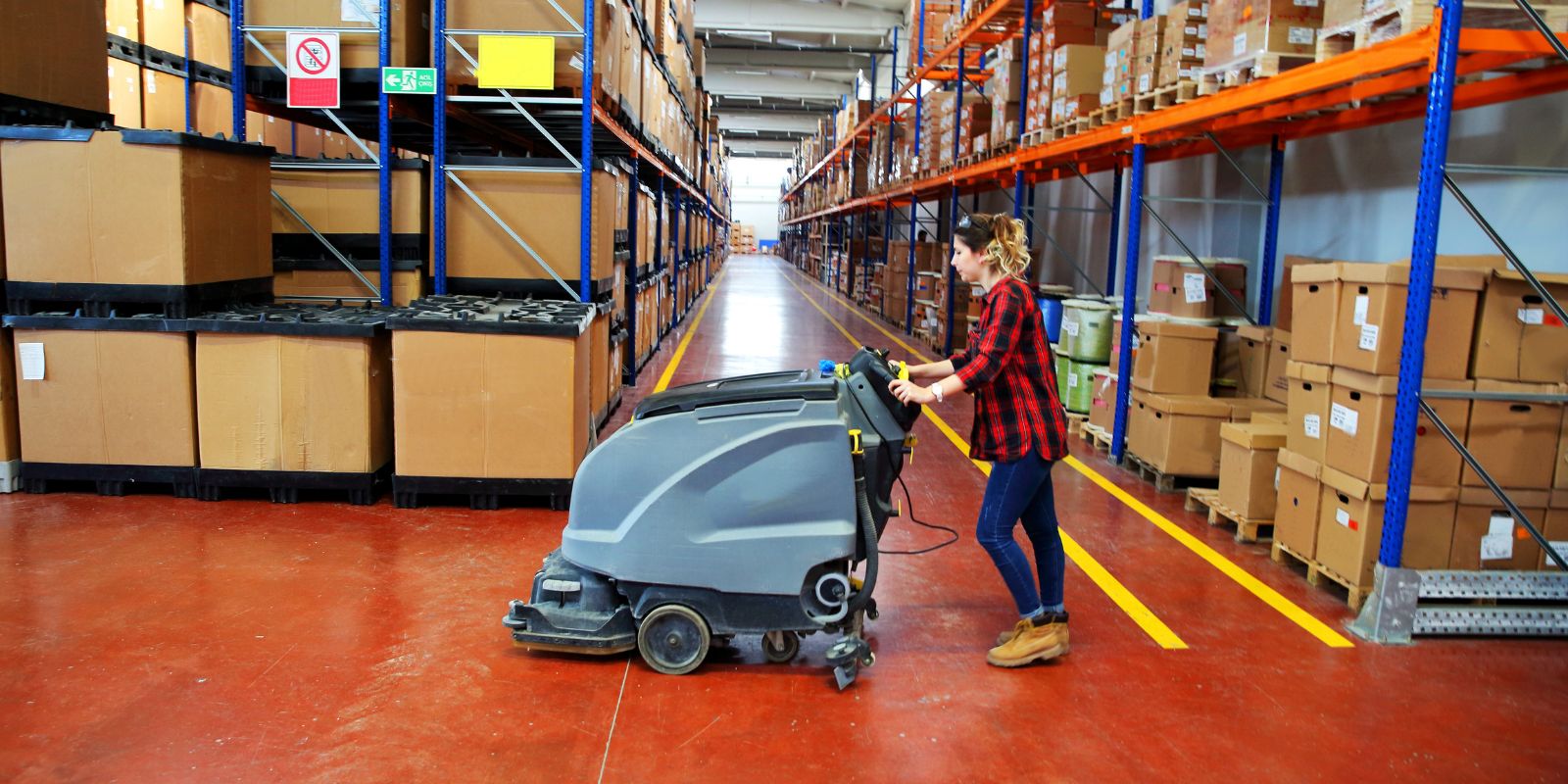
The floor situation alone sets industrial cleaning apart. Warehouse floors — typically concrete, epoxy-coated, or sealed — require scrubbing equipment that a standard janitorial company doesn’t own: industrial floor scrubbers, sweepers, and ride-on equipment capable of covering large square footage efficiently and safely. A mop-and-bucket approach to a 50,000-square-foot warehouse floor isn’t a cleaning program — it’s theater.
On top of that, industrial facilities operate under OSHA standards that create legal obligations around housekeeping and cleanliness that office buildings don’t share. A cleaning program that doesn’t account for those requirements isn’t just substandard — it’s a compliance liability.
OSHA’s Housekeeping Standard: What It Requires for Industrial Facilities
OSHA’s General Industry housekeeping standard (29 CFR 1910.22) establishes baseline requirements for keeping industrial workplaces clean, orderly, and free of hazards. It’s not a best-practice guideline — it’s an enforceable regulation, and violations can result in citations, fines, and increased scrutiny during inspections.
The standard requires that all places of employment, passageways, storerooms, service rooms, and walking and working surfaces be kept clean, orderly, and in a sanitary condition. Specifically:
- Floors must be kept clean and dry where possible, with drainage or non-slip surfaces where wet processes are involved
- Aisles and passageways must be kept clear and marked where necessary
- Waste and debris must not be allowed to accumulate in working areas
- Spills must be cleaned up promptly to prevent slip hazards
- Storage areas must be maintained in an orderly condition to prevent tripping, fire, or pest harborage hazards
The full text of OSHA 1910.22 is worth reviewing with your safety team if you haven’t recently. The practical implication for cleaning vendors is that any company servicing an industrial facility should understand that OSHA housekeeping compliance is part of what they’re being hired to support — not an afterthought. Ask prospective vendors directly how their program addresses OSHA 1910.22 requirements. A vendor who’s unfamiliar with the standard isn’t qualified for industrial work.
What a Professional Warehouse Cleaning Program Should Include
A well-scoped industrial cleaning program covers the full facility on a schedule calibrated to your operational tempo. Here’s what a comprehensive program looks like by area:
Warehouse Floor Cleaning
The warehouse floor is the highest-maintenance surface in any industrial facility and the one most directly tied to OSHA compliance. A proper floor maintenance program includes daily or frequent sweeping to remove debris and particulate, regular machine scrubbing to address embedded soil and chemical residue, and periodic deep scrubbing for heavy buildup areas. Industrial floor scrubbers and ride-on sweepers — not mops — are the appropriate tools for any warehouse floor above a few thousand square feet. Hard surface floor care that includes periodic stripping, resealing, or recoating of epoxy and specialty coatings extends floor life significantly and maintains the clean, reflective surface that also improves lighting efficiency in the facility.
Restrooms and Break Rooms
Restroom and break room facilities in industrial settings serve shift workers who may experience higher-intensity use during shift changes and breaks. Full nightly cleaning and disinfection of all fixtures, surfaces, and floors is required, with mid-shift servicing for facilities operating multiple shifts. Break rooms — including tables, countertops, appliances, and floors — should be cleaned after each shift if operations allow, or at minimum nightly. Disinfection of high-touch surfaces in these communal areas is especially important in industrial environments where workers have physical contact with equipment and surfaces throughout their shifts.
Loading Docks and Receiving Areas
Loading docks are among the highest-debris areas in any warehouse — they accumulate packing material, cardboard dust, soil tracked in from outside, and spillage from incoming and outgoing freight. They also tend to be neglected in generic cleaning programs because they’re outside the “office” portion of the facility. A proper industrial cleaning scope includes loading dock sweeping and scrubbing, dock leveler and seal area cleaning, and debris removal on a schedule that reflects your receiving volume.
Office and Administrative Areas Within the Facility
Most industrial facilities have an embedded office component — management offices, HR spaces, a break room for administrative staff, and sometimes a customer-facing reception area. These spaces require standard commercial office cleaning — vacuuming, surface wiping, trash removal, restroom service — at a frequency appropriate for their occupancy. They should be specified separately in the scope of work so they don’t get lost inside the larger industrial cleaning program.
Common Areas and Walkways
Pedestrian walkways, marked aisles, stairwells, and any common circulation areas require regular cleaning to maintain both appearance and OSHA compliance. Debris accumulation in marked aisles is a direct OSHA violation. A cleaning program that doesn’t include these areas on a consistent schedule is incomplete.
Exterior Areas
Industrial facilities generate exterior maintenance needs that office buildings don’t: dock aprons, truck courts, exterior concrete, dumpster pads, and perimeter areas that accumulate debris, oil residue, and buildup from heavy vehicle traffic. Periodic pressure washing of exterior surfaces — dock areas, building entrances, and parking areas — is a standard component of a complete industrial facility program. It addresses both appearance and safety, since oil and debris on concrete create slip and fall hazards for workers and drivers.
Post-Construction and Renovation Cleanup
Industrial facilities frequently undergo tenant improvements, equipment installations, or build-outs that generate construction debris, drywall dust, concrete residue, and materials that can’t be addressed with routine cleaning. Post-construction cleanup services restore the facility to operational condition after these projects — handling debris removal, deep floor cleaning, surface wipe-down, and the thorough cleaning that gets a renovated area ready for use.
Scheduling Considerations for Industrial Facilities in DFW
One of the most important planning conversations with any industrial cleaning vendor is scheduling — because industrial operations rarely fit the Monday-through-Friday, 9-to-5 model that most janitorial programs are designed around.
Facilities operating single shifts can typically be cleaned during or immediately after the shift ends, before the next day’s operations begin. Multi-shift operations require a more creative approach: cleaning crew access during active operations, zoned cleaning that works around active areas, or cleaning windows during shift changeovers when activity is lowest.
Key scheduling questions to resolve before signing any contract:
- What areas can be cleaned during operations versus which require the facility to be idle?
- How does the cleaning program accommodate weekend operations or 24/7 shifts?
- What is the vendor’s protocol for cleaning in proximity to active equipment or forklifts?
- How is emergency spill response handled during operating hours?
- Can day porter coverage be added for facilities that need real-time housekeeping support during shifts?
For facilities with ongoing daytime housekeeping needs — spill response, restroom maintenance during shifts, debris removal from active work areas — day porter services provide on-site cleaning support during operating hours without disrupting workflow.
What to Look for in an Industrial Cleaning Vendor in DFW
Not every commercial cleaning company has the equipment, experience, or safety awareness to work effectively in an industrial environment. Before signing with any vendor for warehouse or industrial cleaning work, verify:
- Industrial-grade equipment: Floor scrubbers, ride-on sweepers, and wet/dry vacuums capable of handling the debris types generated by your operations. Ask to see their equipment list before committing.
- OSHA familiarity: Any vendor working in an industrial facility should be familiar with OSHA 1910.22 and understand that housekeeping compliance is part of the scope. If they’re not familiar with the standard, that’s information.
- Safety training for industrial environments: Working in an active warehouse or industrial facility requires awareness of forklift traffic, marked pedestrian zones, hazardous materials handling, and PPE requirements. Confirm that cleaning staff have been trained to work safely in industrial environments.
- Background-checked employees: Industrial facilities often house valuable inventory, equipment, and in some cases sensitive materials. All cleaning staff should be background-checked before accessing your facility.
- Chemical handling knowledge: Industrial cleaning often involves heavier-duty chemicals than office cleaning. Staff should be trained in proper handling, storage, and disposal, and the vendor should maintain Safety Data Sheets (SDS) for all products used in your facility.
- Insurance: General liability and workers’ compensation coverage appropriate for industrial environments. Verify before anyone sets foot in your facility.
- Specific scope of work: A detailed written scope covering every area, every task, and every frequency. Vague language in an industrial cleaning contract means gaps in the actual cleaning program.
Industrial and Warehouse Cleaning Across DFW
The DFW Metroplex is one of the largest logistics and distribution markets in the country — with major warehouse and industrial concentrations in Grand Prairie, Irving, Arlington, Fort Worth, Carrollton, and along the major freight corridors connecting them. Advantage Facility Services provides industrial and warehouse cleaning services to facilities throughout this market — from distribution centers and fulfillment operations to light manufacturing, food production support facilities, and mixed-use industrial campuses.
We serve industrial clients across Grand Prairie, Irving, Arlington, Fort Worth, Dallas, and throughout the Mid-Cities corridor. Our full-service janitorial programs for industrial facilities include floor scrubbing equipment, documented cleaning protocols, OSHA-aware staff, and management that is directly accountable — not a franchise operator or subcontractor you’ve never met.
Frequently Asked Questions About Warehouse and Industrial Cleaning Services in DFW
What does OSHA require for warehouse housekeeping?
OSHA’s general industry housekeeping standard (29 CFR 1910.22) requires that all work areas, passageways, and walking surfaces be kept clean, orderly, and free of hazards. This includes prompt cleanup of spills, regular debris removal from aisles and workspaces, and maintaining storage areas in an orderly condition. Violations can result in citations and fines during OSHA inspections.
How often should a warehouse be professionally cleaned?
Most warehouses benefit from floor sweeping and restroom and break room service daily or after each shift. Floor scrubbing frequency depends on operations — light-duty warehouses may need weekly scrubbing, while high-debris environments may need it two to three times per week. Loading docks typically need daily attention. Exterior surfaces warrant periodic pressure washing, usually quarterly or semi-annually.
Do industrial cleaning companies use different equipment than office cleaning companies?
Yes — and this is one of the most important distinctions when evaluating vendors. Industrial and warehouse cleaning requires floor scrubbers, ride-on sweepers, industrial wet/dry vacuums, and in some cases specialty equipment for particular debris types or floor coatings. A standard janitorial company relying on mops and upright vacuums cannot effectively clean a large industrial floor. Always ask for a vendor’s equipment list before signing a contract for industrial work.
Can a cleaning company work around active warehouse operations?
Yes, with proper planning and safety training. Cleaning in an active warehouse requires staff trained to work safely around forklift traffic, marked pedestrian zones, and active equipment. The cleaning scope and schedule should be designed with your operations in mind — zoned cleaning, shift-change windows, or day porter coverage for real-time housekeeping during active hours are all viable approaches depending on your facility.
What’s the difference between sweeping and scrubbing for warehouse floors?
Sweeping removes loose surface debris — dust, dirt, packaging material — from the floor. Scrubbing uses water, appropriate cleaning solution, and mechanical action to remove embedded soil, chemical residue, and staining that sweeping alone can’t address. Both are necessary components of a warehouse floor maintenance program. Sweeping should happen frequently; scrubbing frequency depends on the type of operations and the debris load generated.
Do warehouse cleaning contracts include restrooms and break rooms?
They should, but verify this explicitly in the scope of work. Some industrial cleaning proposals focus exclusively on the warehouse floor and loading areas and treat office, restroom, and break room cleaning as a separate line item. A comprehensive industrial cleaning program should cover the entire facility. Confirm which areas are included before signing anything.
What should I look for in a DFW warehouse cleaning company?
Industrial-grade floor equipment, OSHA 1910.22 familiarity, safety training for industrial environments, background-checked staff, chemical handling knowledge with maintained SDS documentation, appropriate insurance, and a detailed written scope of work covering every area and task. A vendor who can’t speak specifically to industrial cleaning requirements isn’t the right fit for the work.
Can the same company handle both my warehouse and office areas?
Yes — and consolidating to a single vendor simplifies management, ensures consistent accountability, and eliminates the coordination overhead of managing separate cleaning contracts for the industrial and administrative portions of your facility. Confirm that the vendor has experience with both environments and that the scope of work addresses both areas specifically.
Get a Custom Cleaning Proposal for Your DFW Industrial Facility
Advantage Facility Services provides warehouse and industrial cleaning services to facilities throughout the Dallas-Fort Worth Metroplex. Our programs are built around your operations, your facility type, and your compliance requirements — with the right equipment, trained staff, and a documented scope of work that holds up. Contact us today for a free facility walk-through and a customized proposal.
Sorry, the comment form is closed at this time.