


08 Oct Dental Office Cleaning Services in DFW: What Practice Owners Should Require From a Vendor
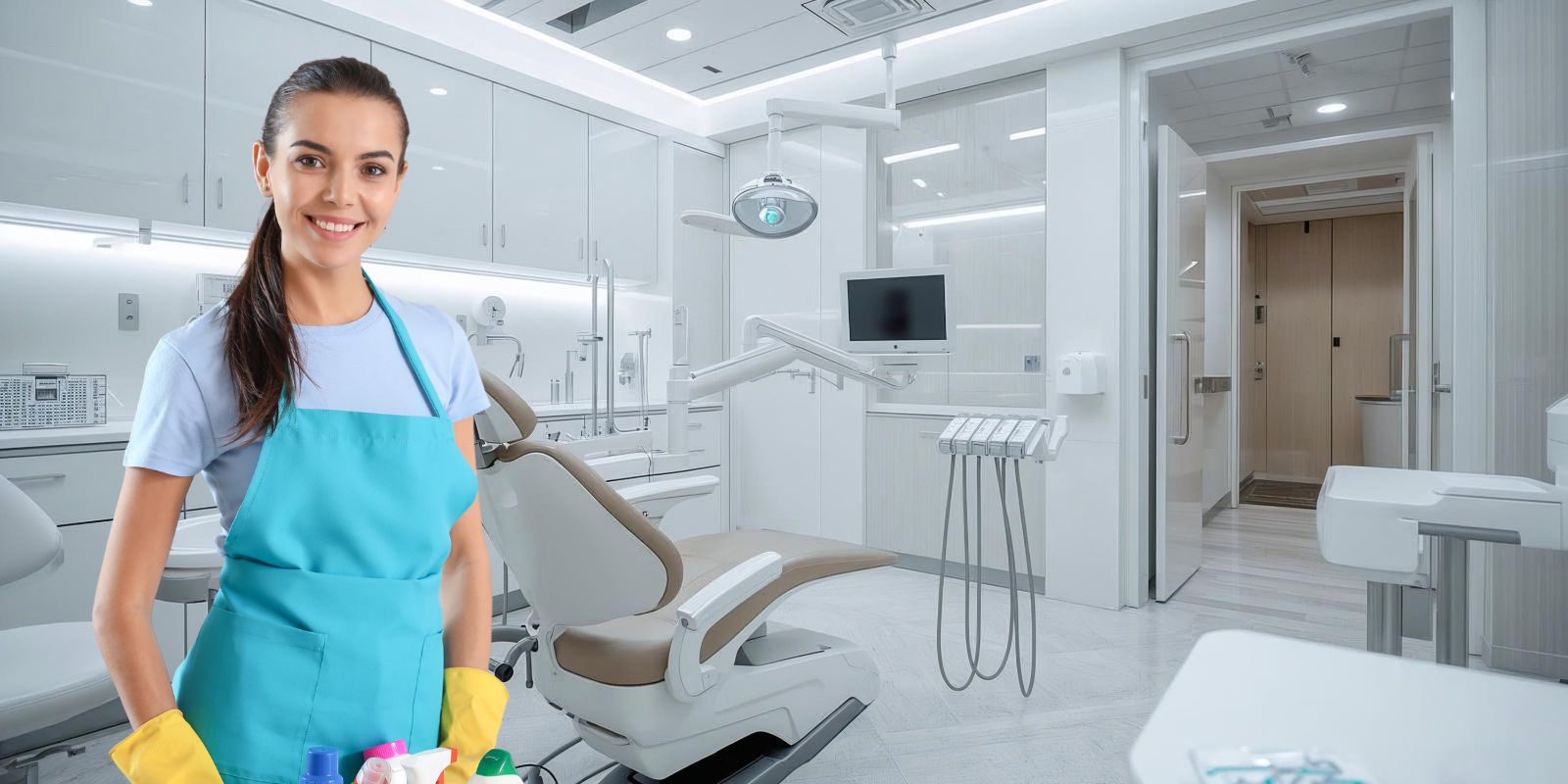
Dental office cleaning services should cover everything in your practice that isn’t a clinical contact surface or a piece of instrumentation: reception, waiting rooms, restrooms, floors, operatory housekeeping surfaces, and the areas around your sterilization center. Your clinical team handles chairside disinfection and instrument processing. A professional cleaning company handles the rest, and handles it to a standard that matches a clinical environment. If you own or manage a dental practice in the Dallas-Fort Worth area, this guide explains how the work divides, what a complete cleaning scope looks like, and what to verify before you hire anyone.
Why Dental Office Cleaning Services Differ From Standard Janitorial Work
A dental practice sits between an office and a medical facility. Patients walk in expecting a polished, welcoming space like any professional office. They also expect the same level of cleanliness they’d want in a clinic, because they’re about to sit in a chair while someone works in their mouth.
That dual standard is why general office cleaning often falls short. A cleaning crew that vacuums, empties trash, and wipes down the front desk isn’t doing anything wrong for an accounting firm. In a dental practice, the same crew may not understand which surfaces need disinfectant instead of a damp cloth, what to leave alone in an operatory, or why the sterilization area has different rules than the break room.
The right dental office cleaning services bring the discipline of healthcare cleaning to a patient-facing space, and they respect the boundary between what the cleaning team does and what your clinical staff does.
Who Cleans What: Clinical Contact Surfaces vs. Housekeeping Surfaces
The most useful way to understand dental office cleaning services is through the distinction the CDC draws in its dental infection control guidance. It sorts environmental surfaces into two categories.
Clinical contact surfaces are the ones touched during patient care: light handles, dental unit switches, and computer equipment at the chair. Per the CDC, these should ideally be covered with an FDA-approved surface barrier that’s changed between patients. When barriers aren’t used, the surfaces are cleaned and then disinfected with an EPA-registered hospital disinfectant. This is the dental team’s responsibility, and it happens between patients, on the practice’s clock.
Housekeeping surfaces are the ones that don’t touch patients or the devices used in procedures: floors, walls, sinks, and similar areas. The CDC’s environmental surface guidance says these can be cleaned with less rigorous methods than clinical contact surfaces, with disinfection required if a surface is visibly contaminated with blood. The CDC also recommends preparing cleaning and disinfecting solutions fresh daily, and cleaning reusable mops and cloths after use so they can dry.
Housekeeping surfaces make up most of the square footage in a dental practice. That’s the territory a professional cleaning company owns, and it’s where consistency matters most.
What Professional Dental Office Cleaning Services Should Include
A thorough scope covers each area of the practice at a frequency that matches how it’s used. Here’s what to expect.
Reception and Waiting Areas
Dental office cleaning services should start with the area patients see first. The reception area is the one most responsible for the impression your practice makes. Daily service should include vacuuming or mopping, wiping down the front desk, sanitizing chairs, armrests, clipboards, and pens, cleaning glass and entry doors, and emptying trash. Magazines, children’s toys, and shared surfaces in waiting rooms deserve regular disinfection, particularly in pediatric and family practices.
Operatory Housekeeping
Dental office cleaning services in the operatory need a careful, defined scope. The cleaning team handles floors, walls, sinks, cabinet exteriors that aren’t clinical contact surfaces, and trash. The clinical team handles chair controls, light handles, trays, and anything touched during treatment. A good vendor will work with your office manager to write this boundary down, so nobody guesses and nothing is missed or disturbed.
Sterilization Area Surroundings
The sterilization center is where instruments are processed, so cleaning staff should not touch instruments, sterilizers, or instrument cassettes. What they can and should do is keep the surrounding floors, counters designated for housekeeping, and waste containers clean, using protocols your practice approves. Many practices restrict this area to specific staff or specific tasks. A vendor should follow those restrictions without argument.
Restrooms and Staff Areas
Patient restrooms are a significant factor in how people judge a practice, so dental office cleaning services should treat them as a priority. Fixtures, floors, dispensers, and touch points should be cleaned and disinfected daily. Break rooms, staff restrooms, and private offices deserve the same attention.
Floors and Carpet
Dental practices tend to have a mix of resilient flooring in clinical areas and carpet in waiting rooms, hallways, and private offices. Resilient floors need regular machine cleaning, and periodic hard surface floor care keeps them looking sharp and slip-resistant. Waiting room carpet collects the most foot traffic of any surface in the building, so scheduled commercial carpet cleaning keeps stains, odors, and wear under control between daily vacuuming.
High-Touch Disinfection
Door handles, light switches, countertops, elevator buttons, check-in kiosks, and payment terminals pass germs from patient to patient all day long. Regular disinfection of high-touch surfaces with EPA-registered products is a core part of dental office cleaning services, and it supports the infection control culture your clinical team works to maintain.
What Dental Office Cleaning Services Should Never Include
Knowing what’s off limits matters as much as knowing what’s included. In a dental practice, the cleaning team should not:
- Handle, clean, or reprocess instruments, handpieces, or sterilization equipment
- Touch or move sharps containers, or handle sharps in any form
- Handle regulated medical waste, which your practice manages through its own waste plan and licensed hauler
- Service dental unit waterlines or suction systems
- Move, reposition, or clean radiology equipment and lead aprons
These tasks fall under your practice’s bloodborne pathogens program. OSHA’s Bloodborne Pathogens Standard (29 CFR 1910.1030) places the obligation on the employer to protect workers from occupational exposure to blood and other potentially infectious materials, which in dentistry includes saliva during dental procedures. A vendor that’s casual about these boundaries is a liability to your practice. A vendor that raises them before you do is one that understands your environment. For a deeper look at the regulatory side of healthcare cleaning, see our guide to healthcare cleaning compliance in Texas.
Scheduling Around Patient Hours
Most dental practices run on tight appointment schedules, and dental office cleaning services shouldn’t disrupt the day. The standard approach is after-hours service, with a crew arriving once the last patient leaves and finishing before the team arrives the next morning. That keeps the practice quiet during treatment and gives the cleaning team uninterrupted access to every area.
Some practices prefer lighter daytime support instead of, or in addition to, nightly service. Restrooms and waiting rooms can get heavy use between morning and afternoon blocks, and a short midday touch-up keeps the patient experience consistent. Day porter services are designed for exactly that kind of real-time upkeep. If you’re weighing the options, our breakdown of day porter versus night cleaning walks through how each approach works.
New practices and renovated offices have different needs. A new buildout leaves behind drywall dust, adhesive residue, and fine construction debris that routine cleaning can’t address. A one-time deep clean before opening day, supported by post-construction cleanup, makes sure the first patients walk into a space that’s ready for them.
What to Verify Before Hiring Dental Office Cleaning Services
Ask these questions before you sign with anyone:
- Healthcare experience: Has the company cleaned dental or medical facilities before, and can it explain the difference between housekeeping and clinical contact surfaces?
- Products: Does it use EPA-registered disinfectants, and will it share product names and safety data sheets with your office manager?
- Written scope: Is the division of responsibilities between the cleaning team and your clinical staff documented, area by area?
- Background checks: Are all cleaning staff background-checked? Your practice stores patient records, controlled supplies, and equipment, so this matters.
- Training: Are employees trained for patient-facing healthcare settings, including how to handle a spill or an unexpected exposure situation?
- Insurance: Can the company provide current certificates for general liability and workers’ compensation?
- Accountability: Is there a single point of contact for service issues, and a clear process for fixing missed tasks?
It’s also worth reading through what to look for in a commercial cleaning contract before signing, especially the termination, subcontracting, and insurance clauses.
Dental Office Cleaning Services Across the Dallas-Fort Worth Area
Advantage Facility Services is based in Grand Prairie and serves dental practices, specialty clinics, and medical offices across the Metroplex. Our medical facility cleaning experience carries directly into dental settings, where patient-facing spaces and clinical-adjacent areas both need attention. We build schedules around your appointment hours, and our dental office cleaning services include after-hours service as a standard option.
We work with practices in Grand Prairie, Arlington, Irving, Dallas, Fort Worth, and throughout the Mid-Cities. If your practice is in Frisco, McKinney, or the surrounding area, see our guide to medical cleaning services in North Dallas. Our full-service janitorial programs give you one team and one point of contact for daily cleaning, disinfection, and floor care.
Frequently Asked Questions About Dental Office Cleaning Services
What do dental office cleaning services include?
Dental office cleaning services typically include reception and waiting room cleaning, restroom cleaning and disinfection, floor care, operatory housekeeping surfaces such as floors, walls, and sinks, trash removal, break room and staff area cleaning, and disinfection of high-touch surfaces. Clinical contact surfaces and instrument processing remain the responsibility of your dental team.
How often should dental office cleaning services be scheduled?
Most dental practices need professional cleaning every day they see patients. Daily service covers restrooms, waiting areas, floors, and trash. Periodic deep cleaning, such as carpet extraction and hard floor care, is usually scheduled monthly, quarterly, or as needed based on traffic and wear.
What’s the difference between cleaning and disinfecting in a dental office?
Cleaning removes dirt, debris, and some germs from a surface using soap or detergent and water. Disinfecting uses an EPA-registered chemical product to kill germs on a surface that has already been cleaned. In a dental setting, clinical contact surfaces require disinfection between patients, while housekeeping surfaces like floors and walls can generally be cleaned, with disinfection added when a surface is visibly contaminated.
Who is responsible for cleaning operatories, the dental team or the cleaning company?
Responsibility is shared. Your clinical team handles chairside surfaces, instruments, and anything touched during treatment. The cleaning company handles housekeeping surfaces, including floors, sinks, walls, and trash. The best practice is to document this division in a written scope of work.
Can a cleaning company clean the sterilization area?
A cleaning company can maintain the floors, designated counters, and waste containers around a sterilization area under protocols your practice approves, but it should never handle instruments, sterilizers, or instrument cassettes. Many practices limit access to this area, and a qualified vendor will follow those rules.
Do cleaning staff handle medical waste or sharps?
No. Regulated medical waste and sharps should be handled by trained dental staff and your licensed waste hauler under your practice’s bloodborne pathogens program. Cleaning staff should only handle regular trash and should be told never to touch sharps containers or biohazard bags.
When is the best time to schedule dental office cleaning services?
After hours is the most common choice because it avoids disrupting patients and gives the cleaning team full access to the practice. Some offices add midday touch-ups for restrooms and waiting areas. New buildouts and renovations benefit from a one-time deep clean before the practice opens.
How do I choose dental office cleaning services in DFW?
Look for dental office cleaning services with healthcare cleaning experience, EPA-registered products, background-checked and trained staff, current insurance, and a written scope that separates cleaning responsibilities from clinical ones. Ask for references from medical or dental clients, and make sure there is one point of contact who is accountable for the work.
Get a Custom Cleaning Proposal for Your Dental Practice
Advantage Facility Services provides dental office cleaning services and healthcare-grade janitorial support throughout the Dallas-Fort Worth Metroplex, with schedules built around your patients and a written scope your team can review and approve. Contact us today for a free walk-through and a customized proposal for your practice.
No Comments